“The Land of the Thunder Dragon,” “the happiest country,” the first carbon-negative country in the world — Bhutan earns every one of those descriptions. I visited in winter 2019, and this guide covers what’s changed since, along with what hasn’t.
Bhutan at a glance (for Indian travelers)
- Best time to visit: March to June for the most comfortable weather. November to February is also good, but expect it to be very cold and crisp.
- How long you need: 5-7 days covers Thimphu, Paro, and the Tiger’s Nest hike comfortably.
- Entry: Indian nationals don’t need a visa or passport — just a permit at the point of entry, valid for 7 days in Thimphu and Paro (an extension and inner-line permits for other regions are arranged in Thimphu).
- Cost — this has changed since 2019: Since Bhutan’s post-pandemic reopening, Indian nationals now pay a Sustainable Development Fee (SDF) of roughly ₹1,200 per person, per night. Unlike the bundled daily rate other nationalities pay (which includes guide, food, accommodation, and transport), this fee for Indians is separate — your other costs are on top of it, not included in it. Given that, traveling with a tour group can work out simpler and better value than arranging everything independently, since the per-day cost isn’t already bundled the way it is for foreign tourists. Double-check the current permit process and fee before you travel — Bhutan’s tourism policy has changed more than once in recent years.
- Immigration offices are closed on weekends — if entering by road via the Jaigaon-Phuentsholing border, aim to arrive between Tuesday and Thursday to avoid the Monday/Friday crowds.
Food
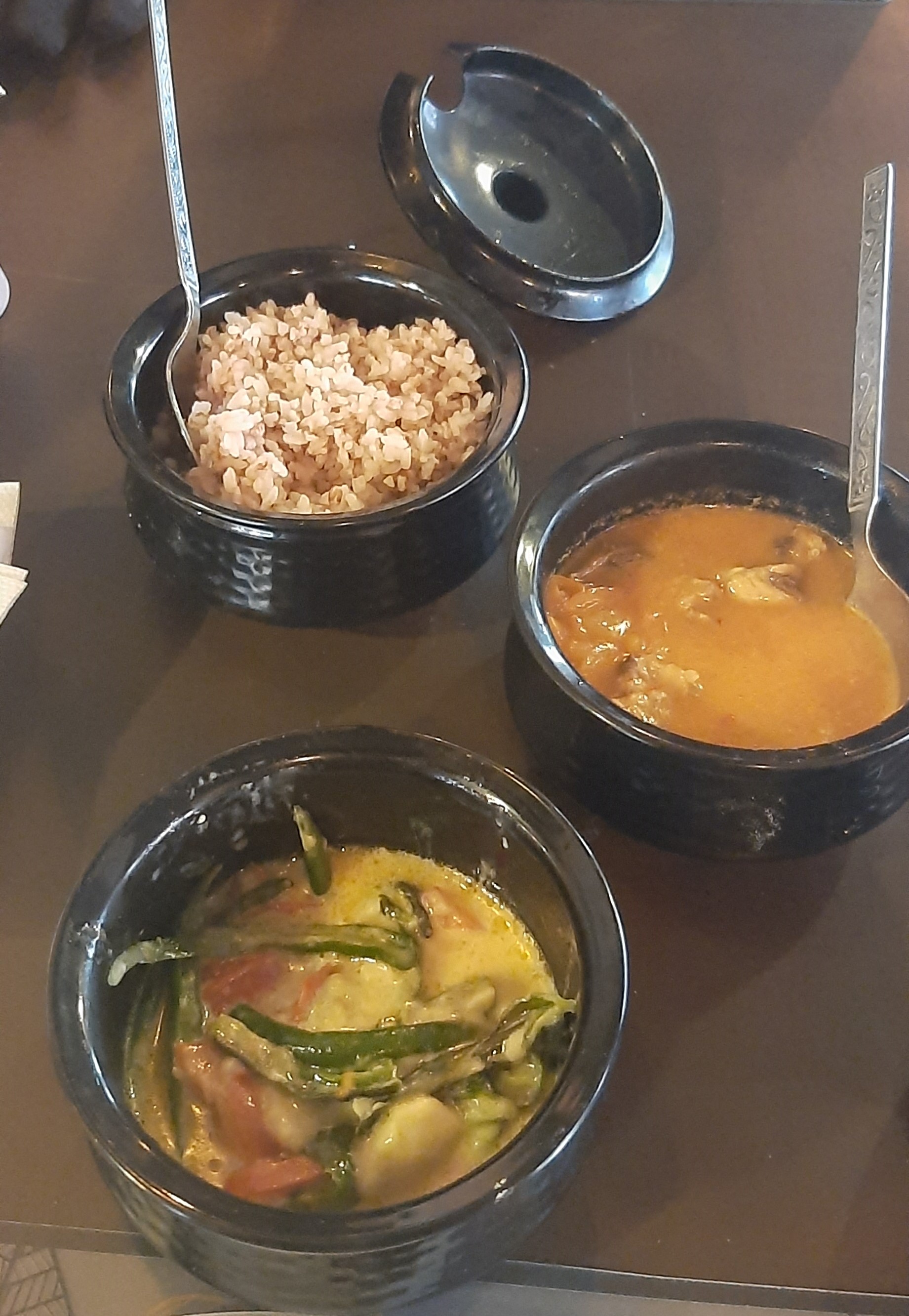
Bhutan is a genuinely great destination if you like cheese and red meat. Ema Datshi (chilli and cheese) is the national dish and worth having more than once. Vegetarian options exist too — Kewa Datshi (potato and cheese) and Shamu Datshi (mushroom and cheese) are both worth trying, best eaten with the traditional red sticky rice.
Thimphu and Paro
Thimphu, the capital, is walkable, calm, and worth exploring on foot rather than by taxi — we walked the length of the city with our backpacks and don’t regret it. The Buddha Dordenma, the largest sitting Buddha statue in the world, is worth an hour of your time.
Paro is Bhutan’s most-visited town, mainly because of its proximity to the airport and to the Tiger’s Nest Monastery — one of the most sacred sites in Buddhism, and the reason most people come to Bhutan at all.
The Tiger’s Nest hike
This is a genuinely demanding trek — up and down three mountains before reaching the monastery on the fourth, roughly 900m of elevation gain over about 4km. It took us a full day.
Be honest with yourself about how rested you are before attempting it. Our trek day followed a late night out — karaoke, singing, drinks, back to the hotel well past midnight — and we were nowhere near well rested the next morning. The hike itself is demanding enough on a full night’s sleep; carry water and snacks, and give yourself the best possible start.
Practical tips
- Verify the current SDF and permit process before you go — this has changed multiple times since 2019, and the numbers above should be confirmed close to your travel dates.
- Consider a tour group over independent travel for the logistics, given the per-day fee structure for Indians doesn’t bundle your other costs the way it does for other nationalities.
- Get a proper night’s sleep before the Tiger’s Nest hike. It’s a full-day, steep trek — treat the night before like you’re prepping for a hike, not a big night out.
Frequently asked questions
Do Indian nationals need a visa for Bhutan? No — Indians enter on a permit rather than a visa, and don’t need a passport (a valid ID is generally sufficient), though it’s worth confirming current documentation requirements before you travel.
How much does a Bhutan trip cost for Indian travelers now? Since Bhutan’s post-pandemic tourism changes, Indian nationals pay a Sustainable Development Fee of roughly ₹1,200 per person per night, separate from accommodation, food, and transport costs — different from the fully-bundled rate other nationalities pay.
Is the Tiger’s Nest hike difficult? Yes — it’s a full-day trek with around 900m of elevation gain across three mountains before reaching the monastery. Doable without technical experience, but genuinely demanding; go in well rested.
What’s the best time to visit Bhutan? March to June for the most comfortable weather. November to February also works well if you don’t mind very cold, crisp conditions.