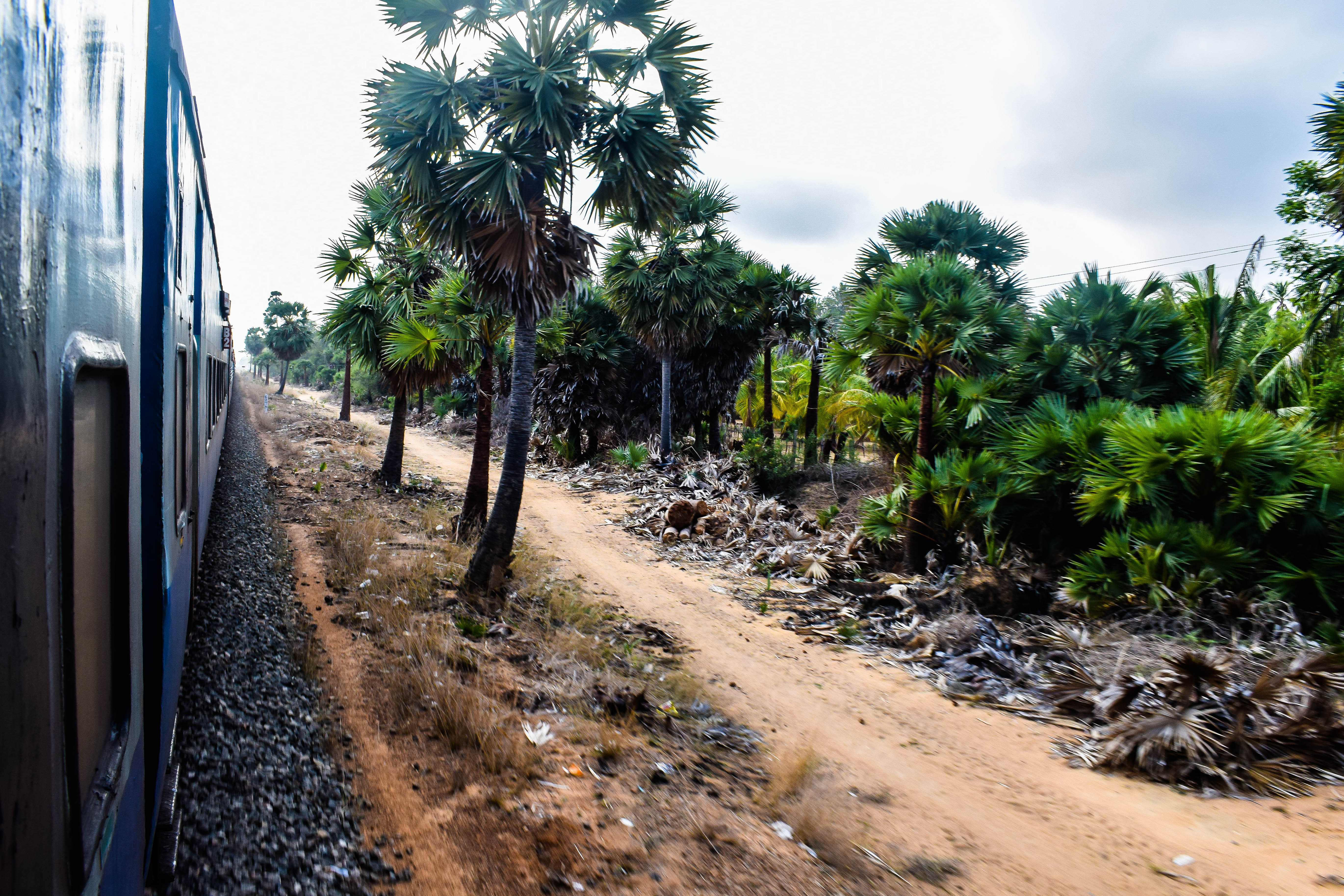
“I believe every child in this country should travel for a year across India after completing school. It is very cheap to travel here,” Pankaj Tripathi once said, and this trip proved it. I covered Rameswaram, Dhanushkodi, Kanyakumari, and Madurai on a college-era budget, and it’s still one of the cheapest, most rewarding routes in the country if you plan the timing right.
Tamil Nadu (this route) at a glance
- Best time to visit: October to February — the heat further south in Tamil Nadu is a real factor outside this window, especially around Kanyakumari and Madurai.
- How long you need: 3-5 days is enough to cover Rameswaram, Dhanushkodi, Kanyakumari, and Madurai without rushing.
- Budget: My original trip ran on roughly ₹5,000 total, backpacking-style. For more comfort — better stays, no compromise on food — budget around ₹3,000/day, covering stay, food, and local transport.
- One timing tip that matters more than it sounds: if you’re taking the train from Chennai toward Rameswaram, time it so you cross the Pamban Bridge — India’s first sea bridge — during daylight. It’s a genuinely memorable stretch and easy to miss if you’re on the wrong train.
Rameswaram and Dhanushkodi
Ramanathaswamy Temple is the main pilgrimage site in Rameswaram — ornate corridors, huge pillars, sacred water tanks. Electronics aren’t allowed inside, so plan to store your things nearby beforehand.
Dhanushkodi is the real highlight: an abandoned town at the southeastern tip of the island, destroyed by a 1964 cyclone and never rebuilt. It’s close enough to Sri Lanka that your phone may briefly catch a Sri Lankan network. The beach here — with the Bay of Bengal on one side and the Indian Ocean on the other — is genuinely the cleanest I’ve come across anywhere in India.
Worth adding if you have time: the House of Kalam (Dr. A.P.J. Abdul Kalam’s childhood home, now a museum) and the nearby memorial built at his grave site.
Kanyakumari
Kanyakumari is where three oceans meet — the Bay of Bengal, the Indian Ocean, and the Arabian Sea — visible as distinct bands of color from the shore. Time your visit around both sunrise and sunset if you can; both are genuinely worth getting up early or staying out for.
The Vivekananda Rock Memorial, reachable by ferry, is where Swami Vivekananda is said to have attained enlightenment — plan for a couple of hours there. Nearby, the Mahatma Gandhi Mandapam marks where his ashes were held after his death.
Madurai
Madurai is Tamil Nadu’s cultural capital, anchored by the Meenakshi Amman Temple — a major historic temple dedicated to Meenakshi (a form of Parvati) and her consort Sundareshwar (a form of Shiva). The Gandhi Memorial Museum, with artifacts from the independence movement, and the Thirumalai Nayakkar Palace round out a day here well.
Practical tips
- Time the Pamban Bridge crossing for daylight — it’s worth restructuring your train booking around this if needed.
- Store electronics before entering temples — most major temples in this route don’t allow phones/cameras inside.
- This route genuinely doesn’t need a big budget. Trains, modest stays, and street/local food keep costs low without cutting the experience short.
Frequently asked questions
Is Dhanushkodi worth the detour from Rameswaram? Yes — it’s arguably the highlight of this whole route. The abandoned-town history and the cleanest beach I’ve seen in India make it worth prioritizing over sleeping in.
How many days do I need for Rameswaram, Kanyakumari, and Madurai? 3-5 days covers all three comfortably, including travel time between them by train.
Is this route budget-friendly? Very. My original trip covered all three destinations for roughly ₹5,000 total on a backpacking budget. Even with more comfort, ₹3,000/day covers stay, food, and transport.
What’s the best time to visit this part of Tamil Nadu? October to February — outside this window, the heat becomes a real factor, especially further south.